Is PAE Right for You? Who’s a Good Candidate for Prostate Artery Embolization
Medically reviewed by George Zlotchenko, MD
If you’ve been getting up three or four times a night to urinate, or you’ve noticed you can’t quite empty your bladder anymore, you’ve probably already looked up what’s causing it. Odds are you landed on the same three letters most men your age eventually do: BPH.
What is BPH?
BPH stands for benign prostatic hyperplasia — a fancy way of saying the prostate gland has grown larger than it used to be. It’s not cancer, and it’s not caused by external factors. One in four men by age 55, and half of 75-year-old men.¹ Beyond just urinary trouble, BPH is frequently associated with a decline in libido and challenges with erectile function.
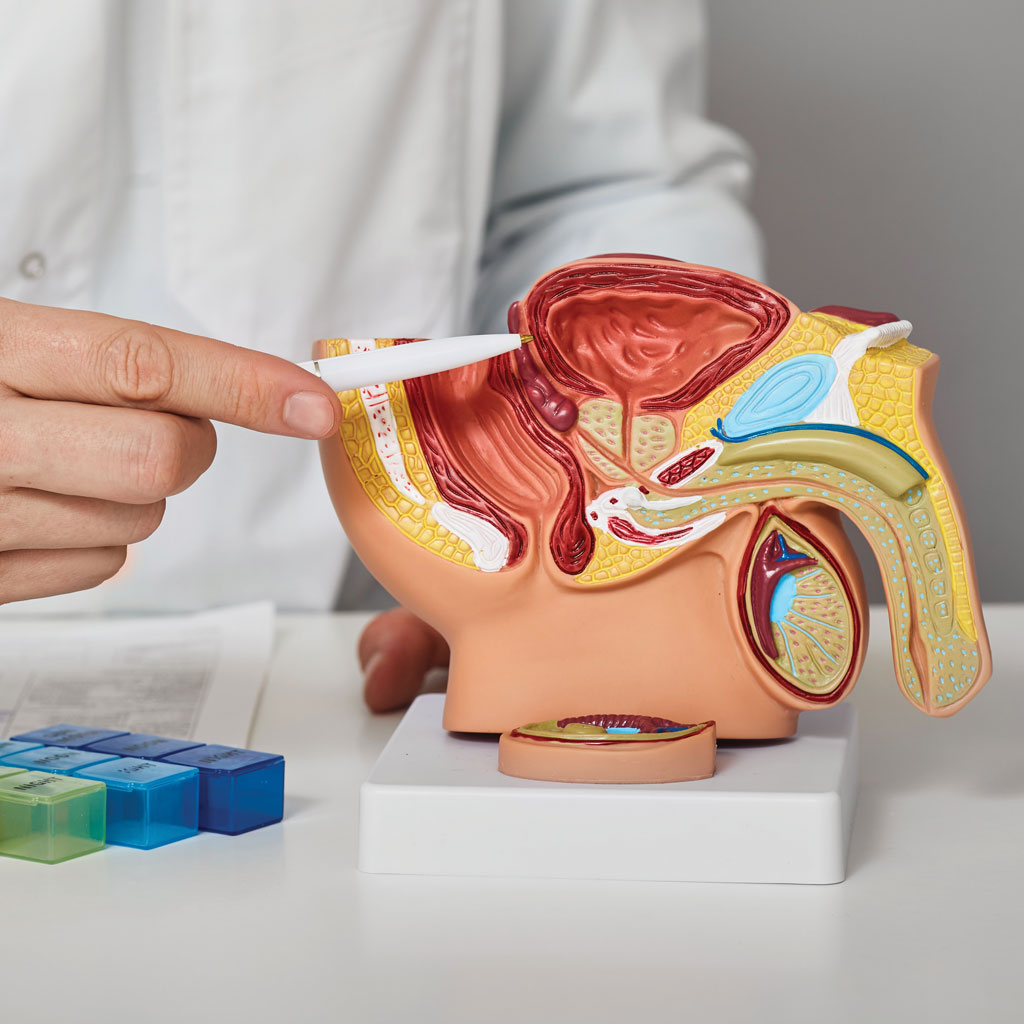
The prostate sits right around the urethra, the tube urine passes through on its way out. So when the prostate grows, it can squeeze that tube and make urination harder in a bunch of annoying ways.
The enlarged prostate symptoms that usually send people looking for answers
Most men don’t usually come in because a doctor told them their prostate looked big on a scan. They come in because of the symptoms they’re feeling:
- Waking up multiple times a night to urinate
- A weak or slow urine stream, or one that stops and starts
- Feeling like you can’t fully empty your bladder
- Straining or waiting a beat before urine starts flowing
- Sudden, hard-to-control urges to go
None of these symptoms are dangerous on their own. But they can cause poor sleep, constant bathroom-mapping when you’re out, and less confidence about long car rides.
Where prostate artery embolization (PAE) fits in
For years, the options for BPH were pretty binary: medication or surgery. Medications like alpha-blockers help some men, but not everyone tolerates them well, and they don’t work for everyone. Surgery — most often TURP, a procedure done through the urethra — can work, but it comes with real recovery time and a meaningful chance of side effects like retrograde ejaculation or erectile changes.
Prostatic artery embolization, or PAE, is a newer option that sits in between. An interventional radiologist threads a thin catheter through an artery (usually near the wrist or groin) up to the small arteries feeding the prostate, then blocks off blood flow and relieves symptoms. Starved of blood supply, that tissue shrinks over the following weeks. No incision, no general anesthesia, and most men go home the same day.
It’s not experimental anymore, either. A 2020 study following patients for up to 10 years after PAE found lasting improvement in symptoms, quality of life, and urine flow, with a favorable safety profile over that whole stretch.² And in 2023, a randomized trial called PARTEM put PAE head-to-head against combined medication therapy in men with enlarged prostates who hadn’t responded well to a single alpha-blocker — PAE came out ahead on symptom relief, and notably, men who got PAE also reported better sexual function afterward than the medication group.³
Is PAE right for me?
This is the question most people actually want answered, and honestly, it depends on specifics a blog post can’t know about you. But here’s the general shape of who tends to be a good fit, based on how candidates are typically selected in the research:
- Your BPH symptoms are moderate to severe and are actually bothering you — not just present on a test.
- Medication hasn’t worked well enough, or side effects made it hard to stick with.
- You’d rather avoid surgery — whether that’s because of the recovery time, the risk profile, or a preference to keep sexual function as unaffected as possible.
- Your prostate is enlarged enough to be causing the blockage — PAE tends to be studied and used in men with meaningfully enlarged prostates, not borderline or mild cases.
There are also reasons someone might not be a candidate. Research reviews on patient selection point to a handful of common exclusions: prostate cancer, bladder stones or large bladder diverticula, a “neurogenic” bladder (where nerve signals to the bladder aren’t working normally), or a bladder muscle that’s stopped contracting effectively regardless of the prostate.⁴ None of these are things you can rule in or out yourself — they come from imaging and a urologic workup, which is exactly what a consultation is for.
What happens during a PAE consultation
If PAE seems like a reasonable option, you’ll likely be asked to fill out a symptom questionnaire (often the IPSS scale researchers use in these same studies), complete imaging or ultrasound to measure prostate size, and do a flow-rate test to measure obstruction. That combination is what separates “I think my prostate’s enlarged” from a treatable diagnosis.
BPH treatment at CU Medicine IR
BPH is common, but it’s not cancer, and there’s no reward for waiting until symptoms get unbearable before asking about options. If medication hasn’t cut it, or you’re wary of traditional surgery, PAE is worth bringing up with a provider.
If you are interested in learning more about how PAE works, or if you would like to set up a consultation with our clinical team, reach out via our contact page or by calling (720) 516-0637.
Sources
- Johns Hopkins Medicine. “Prostatic Artery Embolization.” hopkinsmedicine.org
- Pisco AM, et al. “Prostatic Artery Embolization for Lower Urinary Tract Symptoms Due to Benign Prostatic Hyperplasia: 10 Years’ Experience.” Radiology, 2020.
- PARTEM Trial Investigators. “Prostatic Artery Embolisation Versus Medical Treatment in Patients with Benign Prostatic Hyperplasia (PARTEM): A Randomised, Multicentre, Open-Label, Phase 3, Superiority Trial.” The Lancet Regional Health – Europe, 2023.
- Sun F, et al. “Clinical Predictive Factors in Prostatic Artery Embolization for Symptomatic Benign Prostatic Hyperplasia: A Comprehensive Review.” Translational Andrology and Urology, 2020.